
Guillermo del Toro's “Frankenstein” (2025) Review
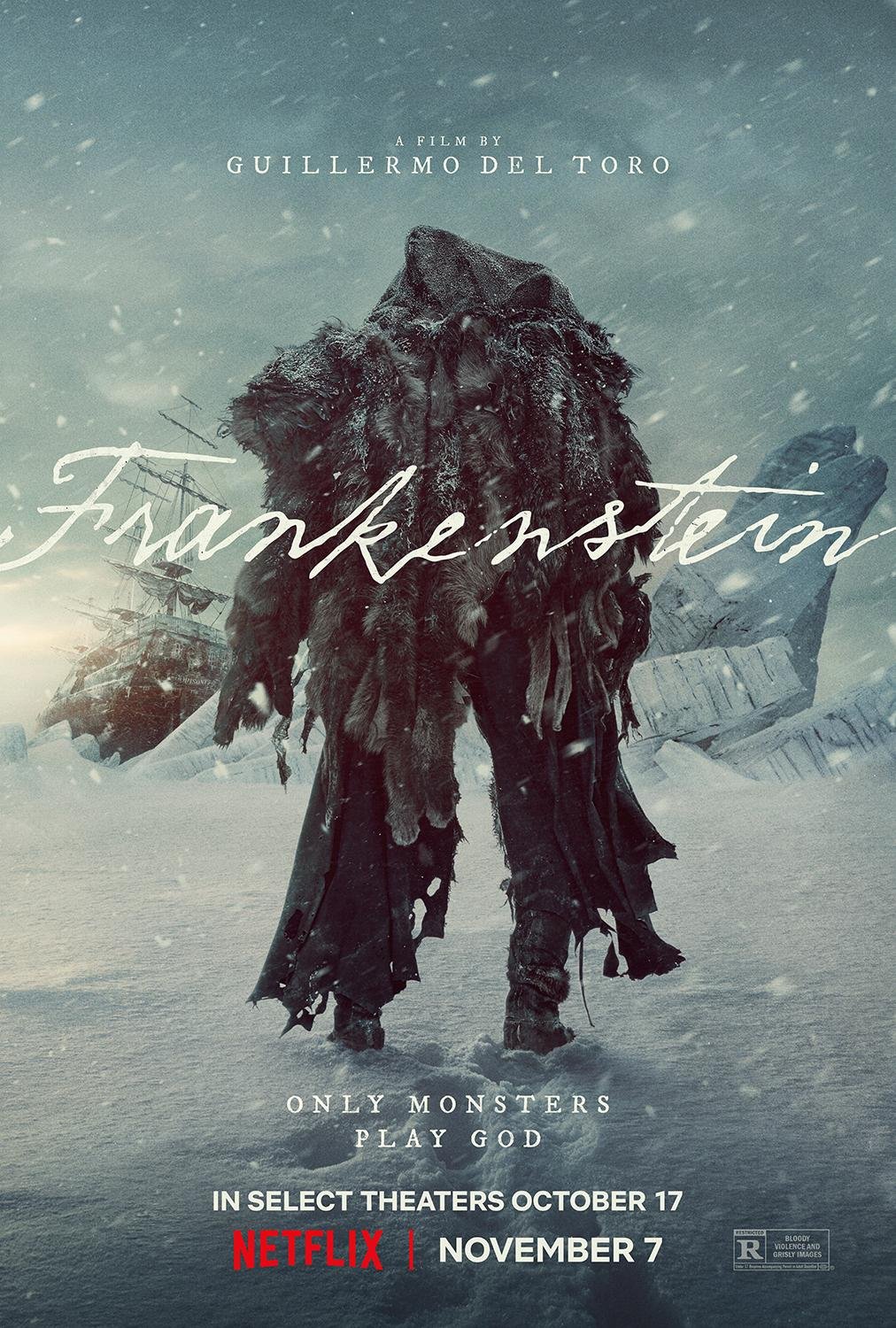
I'm going to start this off by saying you need to watch this movie. I’ve been waiting for Guillermo del Toro’s Frankenstein from 2025 for a long, long time. It’s only available on Netflix, which, I guess, goes to show you how many people are really clamoring to go to a theater to see something like this. They seem to only put out horror movies now—I saw yet another horror movie trailer today—but this one? It was fantastic. I really, really enjoyed it.
Not Your Grandpa's Frankenstein
The first thing you need to know is that this is not a remake of the old Boris Karloff version. There's no Igor, and there's no digging up the grave.
I actually watched the Karloff Frankenstein all the way through recently, and honestly, it’s its own thing. It has very little to do with the novel. The old movie is beautiful and short; it just takes the basic idea—guy takes a dead body, brings it back to life, it goes on a rampage, and then gets destroyed—and runs with it.
What we are here to talk about is the Guillermo del Toro Frankenstein, and it is a true adaptation of Mary Shelley’s book.
I remember an old A&E movie from high school that was also a good adaptation (it had Luke Goss, who was Nomac in Blade II!), and I honestly think Guillermo would have cast him if he had the choice, but this new guy is great too.
The Story & The Look
The structure follows the book perfectly. The story is first told from Victor Frankenstein's perspective, then he recounts it to the ship's captain, and finally, you get the Monster's perspective. (No need for spoiler alerts—the book's been around for over 100 years!)
It was very, very well done. The cinematography and the overall aesthetic are very "Guillermo." He uses some puppetry instead of relying on CGI in certain spots, which I love.
Victor's Obsession
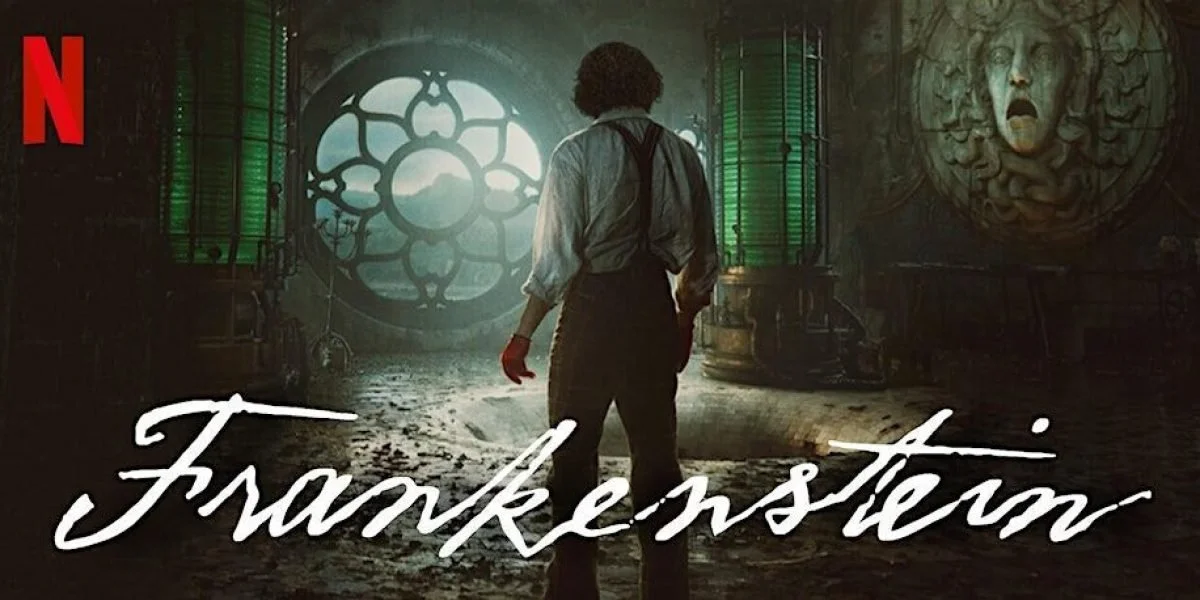
In the book, Victor brings a heart back to life in a jar during a presentation. In this movie, Guillermo makes it more visually interesting: a partial body—with the face, brain, heart, and lungs all exposed—and Victor reanimates it, showing it has motor reflexes to prove he did bring something to life.
Christoph Waltz plays the guy who funds Victor's experiment (I forgot the name, but he's excellent).
Victor's entire driving force comes from his own life. Charles Dance plays his father in flashbacks, and he's totally unloving—a little like a Tywin Lannister type. He wants Victor to be the best, so he’s hard on him in a demeaning, embarrassing way. He whips him a couple of times with a stick. It’s like a Joe Jackson situation: I am better than you, but you'll be good because you have my name, and if you don't improve, I can’t show everyone that I am fantastic and so is my son.
Victor loved his mother because she showed him compassion. She dies in childbirth, and he goes full Anakin Skywalker and kind of decides he’ll use his knowledge to stop people from dying.
The Monster's Birth & Rejection
When he reanimates the Monster, Victor teaches it one word: Victor. The Monster pronounces it, and Victor is thrilled. Almost as if he is saying “Oh my God, I did this, it’s intelligent!” But then he can't get it to say anything else.
He gets impatient and annoyed because it’s not what he wanted it to be. He’s like, I did this, but it’s not working the way I want it to. I can’t show this to anybody. It’s not perfect.
Anyone else would be like, “holy crap! You reanimated something! It’s alive! It's the first step!” It reminds me of when the people who say it's an honor to be nominated for an Academy Award—it is! You were good enough to be in the running! But Victor can't see the victory.
The Monster’s Side of the Story
The Monster eventually shows up on the ship after being lost in the water under the ice, and tells his side of the story.
Guillermo says he wanted the Monster to be like a newborn baby, and that's what you get. while the monster is essentially held captive underneath the castle, he experiments with small physics—a leaf in the sewer and the flow of water—he’s curious. But Frankenstein is in a rush, feeling as though the creation is not as smart as it should be at this point, and he is losing patience with it. So much so that Victor blows up his castle, and the monster within it, although the Monster escapes.
After coming to and wandering the forest, he comes across deer that aren't afraid of him, but the first human he sees immediately shoots at him because they don't understand what he is. Their first thought is, He must be hostile, so we must be hostile first.
Adam and Compassion
He eventually hides in a farmhouse and learns vicariously by observing an old blind man and a little girl. He learns words, pictures, and how to speak.
He wants to return the favor for them needing stuff while he’s mooching off of them, right? So he bundles kindling for them in the night and leaves it outside. They think it’s the spirit of the forest and give thanks. The Monster feels good: Even though they don't know it’s him, he still feels good having compassion shown towards him.
Eventually, the family leaves, but the old man stays. Because he’s blind, he has heightened senses and knows someone is there. He has the Monster come out, and he teaches him to speak, write, and read. He doesn't rush him. The Monster eventually gives himself the name Adam.
He leaves to find his origins, finds Victor’s destroyed laboratory and castle remains as well as his notes, and realizes: Oh, this is me. This is where I came from.
Invincibility and Forgiveness
He returns, but the old man is attacked by wolves. The Monster defends him in a pretty gruesome, horrific scene—he mutilates the wolves and scares them off. The old man dies. Then, the hunters come back, see the dead old man and the Monster, and blame him— classic bad timing.
He eventually tracks down Victor at Elizabeth’s wedding. Elizabeth is compassionate to him, but Victor confronts him. The Monster attacks Victor, and Elizabeth is accidentally killed. Victor blames the Monster.
Victor chases him to the ends of the Earth, literally to the North Pole, to try and kill him. He finally realizes the Monster is invincible—he can heal instantly.
The Monster essentiallysays: You take everything from me, and you won’t give me a companion. Since you won't let me have love, I will instead indulge in rage. I will torment you the rest of your life.
Victor gives Chase to the monster, but the monster just outruns him for a long time. Eventually, Victor succumb to being human and needs to rest. This is when the monster comes back and confront him one more time. In a final effort, Victor gives the Monster a stick of dynamite. The Monster says then ultimately says ‘If this works and you kill me, that will be the end of it. But if it doesn’t work, I’m still coming after you.’ It blows up, does nothing, and the Monster heals again.
Eventually, the Monster gets to the boat, and everyone is caught up to the present.
All Victor has to do is say, "I'm sorry."
> "I'm sorry that I was a shit to you, and this shouldn't have happened... You are my son. I became my father, and I shouldn't have."
The Monster forgives him. He leaves, and the Captain tells the men not to shoot him: Just let him go. He’s been through enough. The Monster has never attacked someone unless it was in retaliation or self-defense. He is gentle, not like the dim-witted Karloff-version.
To reciprocate, the Monster uses his immense strength to break the ship free of the ice.
The Monster walks out onto the ice. Unlike what my high school teacher thought, he doesn’t die—he can’t! As he goes out, the sun comes up, and he feels it. He realizes: Life is there’s more to life than hate, sadness, and evil. It has the the gift of being invincible; so even though he can’t have a companion in another person, he can make the world his companion and just live.
Final Verdict
It was a fantastic story, revisiting it. The Monster was misunderstood.
The movie beautifully highlights the difference between maternal/motherly compassion and paternal obsession.
Guillermo did a fantastic job. The canvas he uses is so beautiful, and honestly, who gives a shit if you can tell something is CG? Get around that—think of it as a play, just using props. The story is what matters, but it looks great, too!
I would say that this movie and Francis Ford Coppola’s Bram Stoker’s Dracula are as close as you're going to get to the books.
This movie should really be how people see Frankenstein in the world. The Karloff version is an iconic, fantastic Halloween movie. This is not a good Halloween movie. This is a good fantasy drama. Very good. Make sure you go watch it on Netflix.